On Decision-Making Under Ambiguity
Large-scale strategy and innovation rarely fail because information is missing.
They fail because decision makers wait for consensus.
Debate signals intelligence and instant reward.
Movement signals riskand exposure.
But markets reward those who act before consensus forms.
They reward action -not analysis paralysis.
The real question isn’twhether you have enough data.
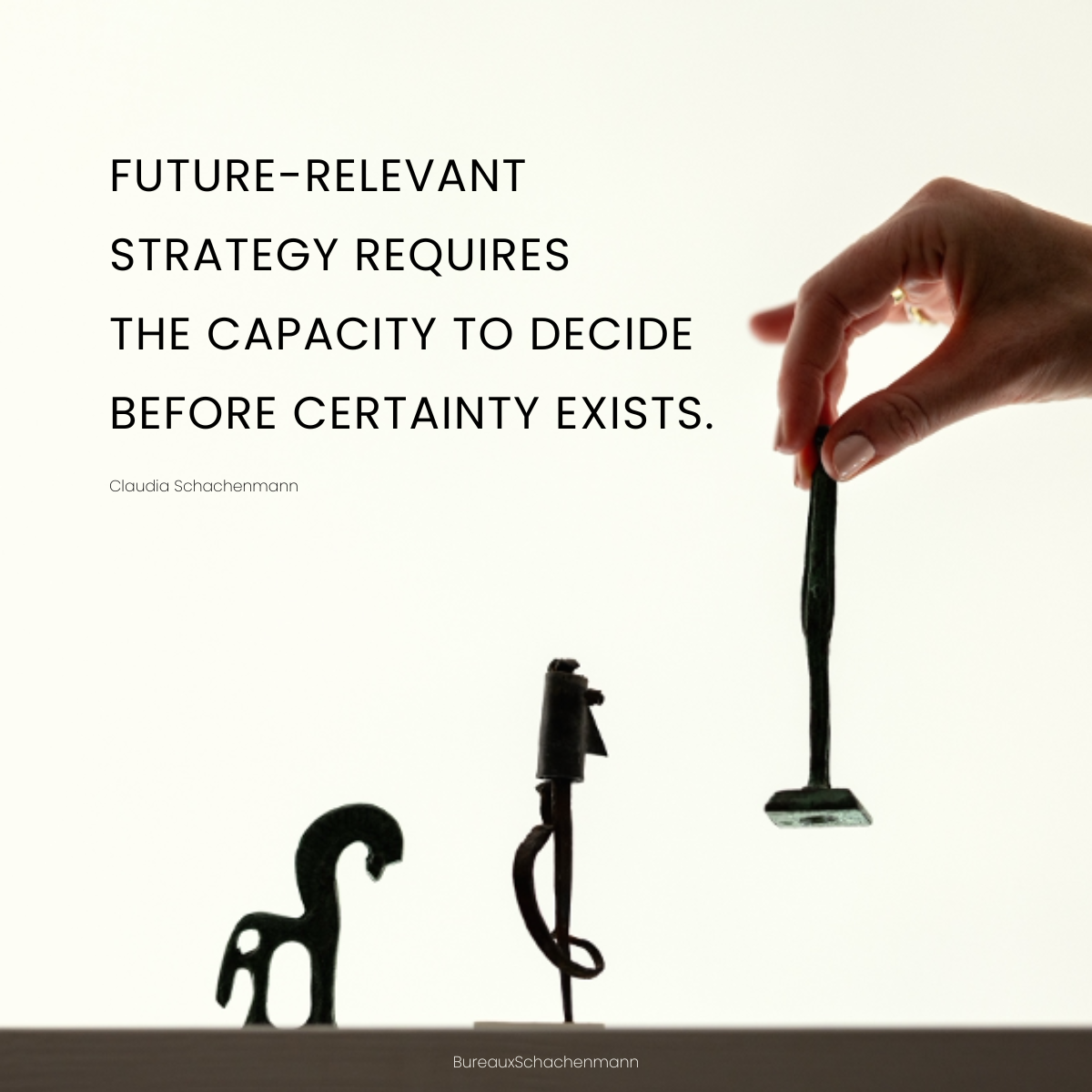
It’s whether you’vebuilt the strategic capacity to act before certainty exists.
And that capacity can be designed - it is part of a strategic process.